


Do Vapes have sugar? The Truth About Vaping and Sweeteners
| ⚡ Quick Answer:
Do Vapes Contain Sugar? No, commercial vapes do not contain sucrose, the real sugar. Upon heating, regular sugar can caramelize and burn, which can destroy a vape heating coil. Primarily sucralose, paired with a naturally sweet vegetable glycerin base for intense sweetness in flavored vapes. These zero-calorie artificial sweeteners do not raise blood sugar or impact ketosis. |
The sensory sweetness is everything in vaping. Walk into any vape shop or browse an online catalog, and you are immediately met with an explosion of dessert, fruit, and candy profiles. From strawberry cheesecake and cotton candy to glazed donuts and blue razz ice, the modern vaping landscape is undeniably sweet. Find out the best CBD vape juices of 2026 here.
For anyone keeping a close eye on their health, whether you’re managing diabetes, adhering to a strict ketogenic diet, or simply trying to cut down on processed carbs, this intense sweetness naturally triggers a vital question: Do vapes contain sugar?
When an e-liquid tastes exactly like a fresh slice of watermelon or a frosted cinnamon roll, your brain naturally assumes that sugar must be a core ingredient. However, the chemistry behind what you are inhaling tells a completely different story.
Deconstructing E-Liquid: What Are You Inhaling?
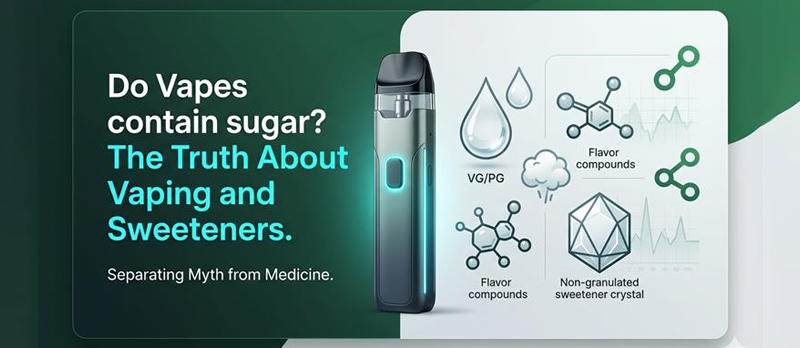
To understand why the answer to whether there is sugar in vapes is a definitive “no,” we first have to peel back the label and look at the actual anatomy of an e-liquid. Whether you are using a massive sub-ohm mod or a compact disposable device, standard commercial e-liquids consist of just four primary components.
Notice what is entirely missing from this foundational list: standard granulated sugar – sucrose, high-fructose corn syrup, and raw honey. Real sugar is completely absent from standard commercial vape juices. Instead, the industry relies on a precise mix of chemical bases and specific flavor concentrates to build its profiles.
Real Sugar and Vaping Coils Do Not Mix
There is a highly practical, mechanical reason why manufacturers do not put actual sugar in vapes. It comes down to basic thermodynamics and the preservation of the heating element inside the device.
Vape devices work by utilizing a battery to heat a tiny metal coil wrapped around a wicking material, usually organic cotton. The e-liquid saturates the cotton, and when the coil heats up to temperatures typically between 180°C and 280°C (356°F to 536°F), the liquid rapidly atomizes into an inhalable vapor.
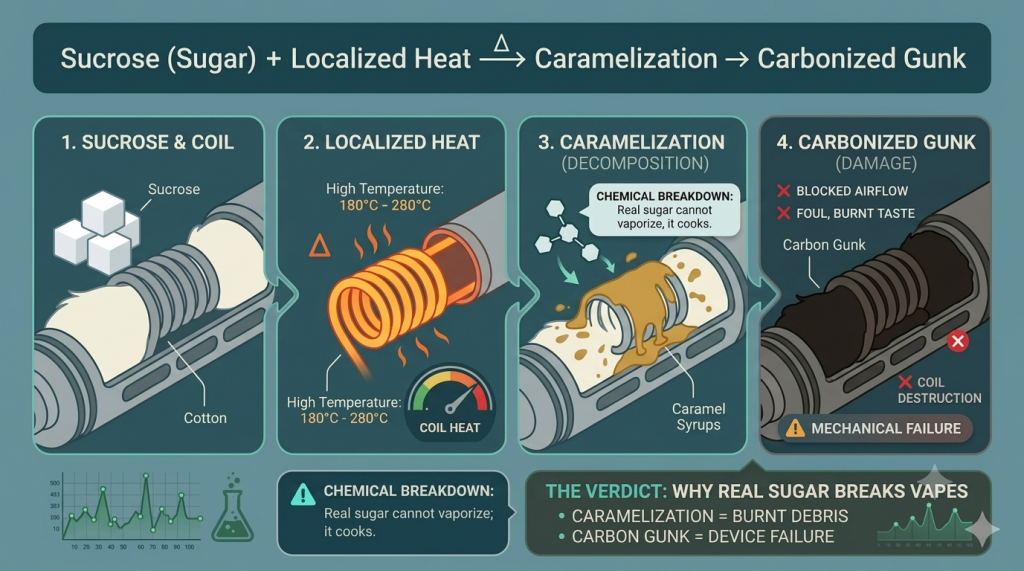
If you were to introduce actual sucrose into this ecosystem, the results would be disastrous for the hardware. Real sugar does not vaporize; it caramelizes and turns into a thick, sticky syrup before rapidly burning. Within just a few puffs, a sugar-laden e-liquid would leave a heavy layer of black, carbonized gunk directly on the heating coil.
In the vaping community, this rapid destruction of hardware is known as “coil gunking.” It chokes off airflow, ruins the wicking capabilities of the cotton, and produces a deeply unpleasant, burnt, acrid taste. Because real sugar fundamentally breaks the mechanics of a vape kit, e-liquid mixologists had to look elsewhere to satisfy the market’s demand for sweet profiles. However, if your vape burnt for other reasons, give a read to our how to fix a burnt vape complete guide.
The Secret Behind the Sweetness: Sucralose
If there is no real sugar in vapes, how do flavored vapes have sugar-like sweetness? The answer lies in high-intensity artificial sweeteners, primarily sucralose.
Sucralose is the same calorie-free sweetener found in yellow “Splenda” packets used to sweeten morning coffee or diet sodas. It is roughly 600 times sweeter than regular granulated sugar, meaning an incredibly microscopic amount is required to achieve an intense flavor burst.
In the manufacturing process, water-soluble sucralose is dissolved into propylene glycol to create a concentrated sweetening additive. Liquid creators mix tiny percentages of this solution into fruit, candy, and dessert profiles to give them that distinct, lip-smacking sweetness on the exhale.
The presence of artificial sweeteners depends entirely on the specific flavor profile and the brand’s formulation, as broken down below:
| Vape Profile Type | Sweetener Concentration | Hardware Impact | Target Experience |
|---|---|---|---|
| Disposables & Candy Profiles | Extremely High | Negligible to user (disposed of before coil degrades). | Intense, lip-smacking flavor hits. |
| Premium Sub-Ohm E-Liquids | Moderate to Low | High (Formulated to extend the lifespan of replaceable coils). | Balanced, layered notes for long-term use. |
| Raw Hemp Distillates & Terpenes | None | Zero (Relies purely on the natural aromatic profile of the plant). | Earthy, authentic, and completely savory. |
Vaping, Blood Sugar, and Diabetics
For individuals living with Type 1 or Type 2 diabetes, tracking everything that enters the body is a matter of daily survival. Seeing the word “sweetener” associated with vaping understandably raises red flags.
Because sucralose is an artificial sweetener, it cannot be broken down or processed by the human body in the same manner as regular carbohydrates. It contains zero carbohydrates and carries an absolute value of zero calories. When you inhale vapor containing trace amounts of atomized sucralose, it does not enter your digestive system, nor does it convert into glucose within your bloodstream.
Consequently, vaping standard commercial e-liquids does not cause an immediate spike in blood glucose levels. From a purely glycemic perspective, the zero-calorie sweeteners utilized in flavored vapes are considered safe for diabetics.
Critical Health Distinction: While the sweeteners in vapes do not impact blood sugar, the nicotine inside them absolutely can. Clinical studies compiled by CDC have shown that nicotine can alter how your body utilizes insulin. Nicotine acts as a stimulant, triggering the release of adrenaline and potentially increasing insulin resistance over prolonged periods.
Disposables vs. Open Systems
The delivery methods for flavor have shifted dramatically. Understanding the difference between device types can give you a clearer picture of how much sweetener you are exposed to.
| Device Type | Sweetener Concentration | Impact on Hardware |
|---|---|---|
| Disposable Vapes | Extremely High | Negligible to the user. Because the entire hardware unit is thrown away once the battery or juice runs out, manufacturers can load the juice with massive amounts of sucralose without worrying about long-term coil preservation. |
| Open System Pods / Tanks | Moderate to Low | High. Users who mix their own juice or buy premium, low-sweetener brands do so to extend the lifespan of their replaceable coils or pods, saving money over time. |
If you are trying to minimize your overall exposure to heavy chemical flavorings and intense artificial additives, moving away from hyper-sweetened pre-filled disposable devices toward an open pod system, where you control the exact brand and style of e-liquid, is a highly strategic move.
Safety and Long-Term Inhalation of Sweeteners
While it is clear that sugar in vapes is a myth, a vital question remains: Is inhaling atomized artificial sweeteners completely safe for human lungs?
The honest, scientifically grounded answer is that the long-term health implications of vaporizing and inhaling sucralose are still being actively studied by medical researchers.
Food-grade artificial sweeteners like sucralose were originally tested, vetted, and approved by global health organizations like the U.S. Food and Drug Administration (FDA) for ingestion, meaning eating and drinking. The human stomach and digestive tract are robust systems designed to filter out, process, and eliminate complex synthetic compounds.
Your lungs, however, are a completely different environment. They are highly delicate structures designed exclusively for gas exchange. When sucralose is exposed to the extreme localized heat of a vape coil over long periods, it can begin to thermally degrade. Medical researchers are currently investigating whether this heat decomposition releases trace organic compounds that could cause minor respiratory irritation over time.
How to Avoid Sweeteners Completely: A Guide for Purists
If you love the harm-reduction benefits of vaping as an alternative to smoking, but you want to eliminate artificial sweeteners from your daily routine, you have several highly accessible options:
Seek Out “No-Sweetener” E-Liquid Brands:
A dedicated segment of the vaping industry caters specifically to flavor purists. Many premium juice manufacturers explicitly label their product lines as “Unsweetened” or “No Added Sweeteners.”
Switch to Pure Menthol or Traditional Tobacco:
If you completely avoid fruit blends, candy profiles, and dessert treats, you drastically reduce your chances of encountering sucralose. True unflavored menthols and earthy, dry tobacco e-liquids rarely utilize sweetening agents.
Vape Unflavored Base Juice:
For the ultimate health-conscious purist, you can purchase unflavored e-liquid. This is simply a clean, odorless blend of raw Vegetable Glycerin, Propylene Glycol, and optional nicotine. It carries a very mild, naturally clean sweetness from the VG, contains absolutely zero flavor chemicals, and maximizes your coil life exponentially.
The Final Verdict
When you pull back the curtain on the chemistry of modern e-liquids, do vapes have sugar in them? The answer to your question is clear and definitive: real sugar cannot be vaporized by electronic vaping devices. The intense sweetness found in your favorite flavored vapes is the result of zero-calorie, zero-carbohydrate artificial sweeteners, primarily sucralose.
While these artificial sweeteners do not contain calories and will not trigger an immediate spike in your blood sugar levels like a regular sugary snack or soda would, it is vital to remember that inhaling atomized flavorings carries its own set of long-term questions. By understanding exactly what goes into your device, choosing high-quality open systems over hyper-sweetened disposables, and opting for low-sweetener or unsweetened juices when possible, you can take full control of your consumption and align your habits with your personal health and wellness goals.
You May Also Ask
Do vapes have sugar or carbs in them?
No. Commercial vapes contain zero real sugar and zero dietary carbohydrates. The intense sweetness comes from high-intensity artificial sweeteners like sucralose, mixed into a naturally sweet vegetable glycerin base, neither of which impacts your daily macro count.
Can you vape actual sugar water?
Real sugar cannot vaporize. The intense coil heat will instantly caramelize the sugar water into a toxic, burning black sludge that ruins your device on the very first puff.
Does vaping break a fast or disrupt ketosis?
No. Because the artificial sweeteners and chemical bases in e-liquids are non-nutritive, they carry zero calories and zero carbs. They will not break an intermittent fast or kick you out of keto.
How do I know if my e-liquid has too much sweetener?
Check your coils. If your pods or coils are burning out, turning completely black, or tasting acrid after just 2 to 3 days of use, your juice is heavily loaded with sucralose.
Do flavored Delta-8 cartridges contain artificial sugar?
No, premium Delta-8 and hemp cartridges do not use synthetic sweeteners. Instead, they rely entirely on natural, plant-derived terpenes to extract distinct flavor and aromatic profiles.



Leave a Reply